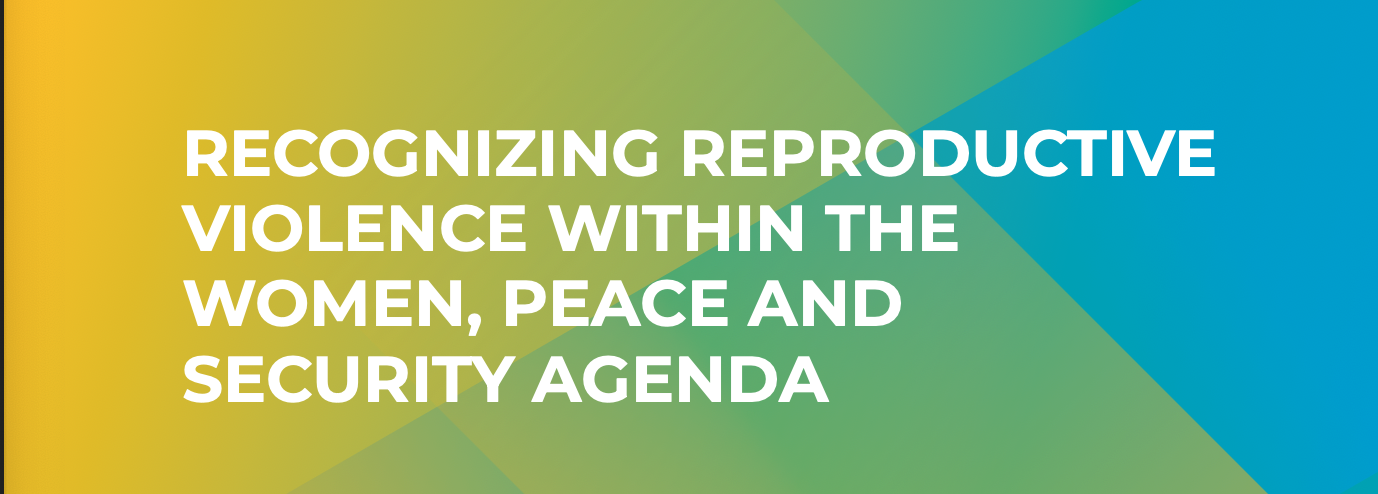
In October 2026, UN Women and the Global Justice Center (GJC) released a report titled “Recognizing Reproductive Violence within the Women, Peace and Security Agenda.” This report examines how reproductive violence occurs during armed conflict and humanitarian crises and argues that it must be recognized as a distinct form of gender-based violence. It emphasizes that reproductive violence is often overlooked because it is treated as a consequence of sexual violence rather than an independent violation of human rights.
This report was made to influence the Women, Peace, and Security (WPS) agenda. The WPS agenda is a series of resolutions adopted by the UN Security Council which aims to address and remedy the distinct and gendered harm of conflict, it adopts that women must be a part of conflict resolution and peace building at every step of the process. The report aims to urge the WPS agenda to adopt explicit attention to reproductive violence as a distinct harm to improve recognition of victims, enable more effective prevention efforts, and ensure better accountability and reptations measures.
The report defines reproductive violence as intentional acts or omissions that harm individuals by interfering with their reproductive autonomy and rights. Some examples include forced pregnancy, forced abortion, enforced sterilization, forced contraception, and denial of reproductive healthcare. These violations can be used to control populations, target marginalized communities, and undermine women’s bodily autonomy.
The report highlights four ways/pillars reproductive violence intersects with the Women, Peace and Security agenda:
- Prevention: Recognizing reproductive violence can help identify early warning signs of escalating conflict, persecution, and genocide.
- Protection: Protecting women requires access to reproductive healthcare, contraception, menstrual supplies, and maternal health services during conflict.
- Participation: Forced pregnancy, infertility, and social stigma create barriers to women’s participation in political life, leadership, and peacebuilding.
- Relief and Recovery: Survivors need long-term healthcare, legal recognition, financial compensation, and comprehensive reparations.
The report highlights the 2026 case Ramos Durand v. Peru, in which the Inter-American Court of Human Rights held Peru accountable for the forced sterilization of Celia Ramos. The Court found that government policies disproportionately targeted rural, Indigenous, and economically marginalized women and ordered reparations, policy reforms, and improved informed-consent protections. For additional information, GJC has also produced a fact sheet to further explain this case.
Ultimately, UN Women and GJC argue that reproductive violence must be explicitly recognized within all four pillars of the Women, Peace and Security agenda. Doing so would improve documentation, prevention, survivor support, and accountability while ensuring that reproductive autonomy is protected as a fundamental human right.