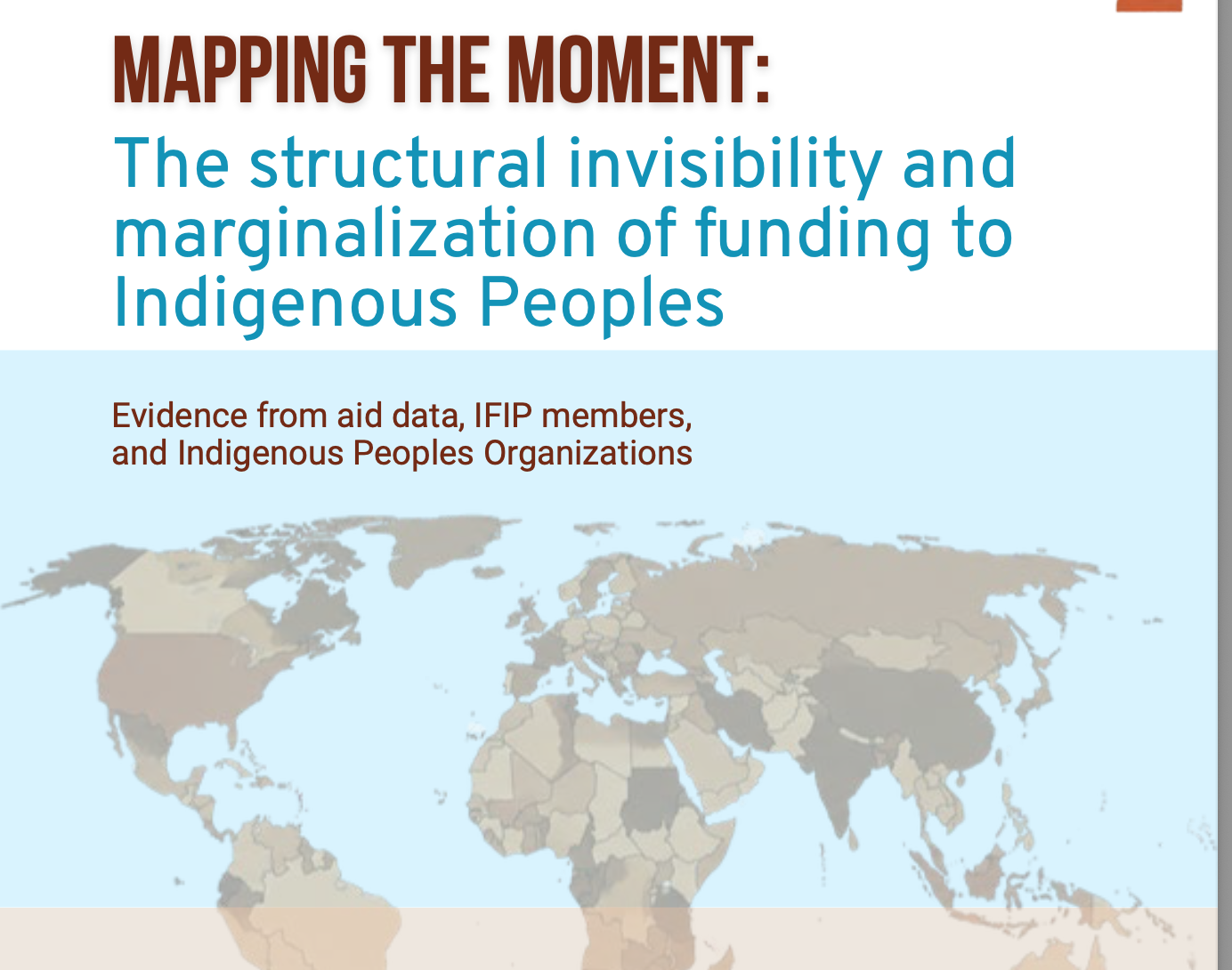
In October 2026, the International Funders for Indigenous Peoples (IFIP) released a new report titled “Mapping the Moment: The Structural Invisibility and Marginalization of Funding to Indigenous Peoples.” The report examines global funding for Indigenous Peoples, focusing on how international aid and philanthropic funding reach Indigenous Peoples Organizations (IPOs), the barriers these organizations face, and the effects of funding reductions on Indigenous communities. A particular emphasis is placed on Indigenous women, who make up the majority of the organizations surveyed and are disproportionately affected by funding cuts.
The report looks at three primary sources of research, an analysis of 900,000 activities in the International Aid Transparency Initiative (IATI) database, a survey of 17 IFIP member organizations, and a survey of 128 Indigenous Peoples Organizations across more than 50 countries. Of the 128 organizations surveyed, 89% were Indigenous women-led or women-focused, and 84% operated with annual budgets under $250,000. The findings were also reviewed through regional consultations with 43 representatives of Indigenous organizations, funds, and networks.
The report found that Indigenous women and youth suffer the greatest consequences when organizations experience funding reductions. Among the 90 organizations that answered questions about which populations were most affected by reduced services, 91% identified Indigenous women, 70% identified Indigenous youth under 25, and 61% identified Indigenous children. The report emphasizes that this finding is particularly significant because 89% of the surveyed organizations were themselves Indigenous women-led or women-focused and 34% of these organizations experienced funding decreases between 2024 and 2025. This means that organizations working to support Indigenous women are also seeing those same women disproportionately affected when funding is reduced.
Additionally, the report found a significant disconnect between the priorities of Indigenous organizations and the areas receiving funding. Among the 84 organizations that identified their top priorities, 65% prioritized women’s rights and gender justice, 49% prioritized land rights and territorial defense, and 46% prioritized climate justice and environmental protection. However, among the 90 organizations reporting funding changes, 69% experienced cuts to women’s rights programming, 58% experienced cuts to land rights work, and 47% experienced cuts to climate justice initiatives. This demonstrates that funding reductions are disproportionately affecting the very issues Indigenous organizations identify as most important to their communities.
The report further examines how these funding reductions create a compounded crisis for Indigenous women. Because the majority of surveyed organizations are Indigenous women-led or women-focused, they are experiencing both general funding shortages and specific reductions in women’s rights programming. The report also identifies restrictions on sexual and reproductive health and rights (SRHR) programming and the rise of anti-rights policies as contributing factors. These funding reductions have directly affected services such as psychosocial support for survivors of gender-based violence, economic empowerment training, and local community monitoring.
Another significant finding is the increased reliance on unpaid labor to compensate for funding shortages. 49% of surveyed organizations reported increased reliance on unpaid volunteer labor, much of which is provided by Indigenous women. The report argues that this places an additional financial and organizational burden on women who are already disproportionately affected by funding reductions. Rather than simply reducing services, the funding crisis shifts the responsibility of maintaining these organizations onto the unpaid labor of Indigenous women.
The report concludes that the funding crisis facing Indigenous women is not simply a result of insufficient financial resources, but also reflects structural problems within international development and philanthropic funding systems. Although international organizations and governments have made commitments to Indigenous rights, there is no standardized system to track how much funding reaches Indigenous-led organizations directly. The report emphasizes the importance of direct funding, greater accountability, and investment in Indigenous-led organizations to support Indigenous self-determination. Ultimately, it argues that funders must move beyond general commitments to Indigenous rights and ensure that resources reach the organizations and women doing the work within their communities.
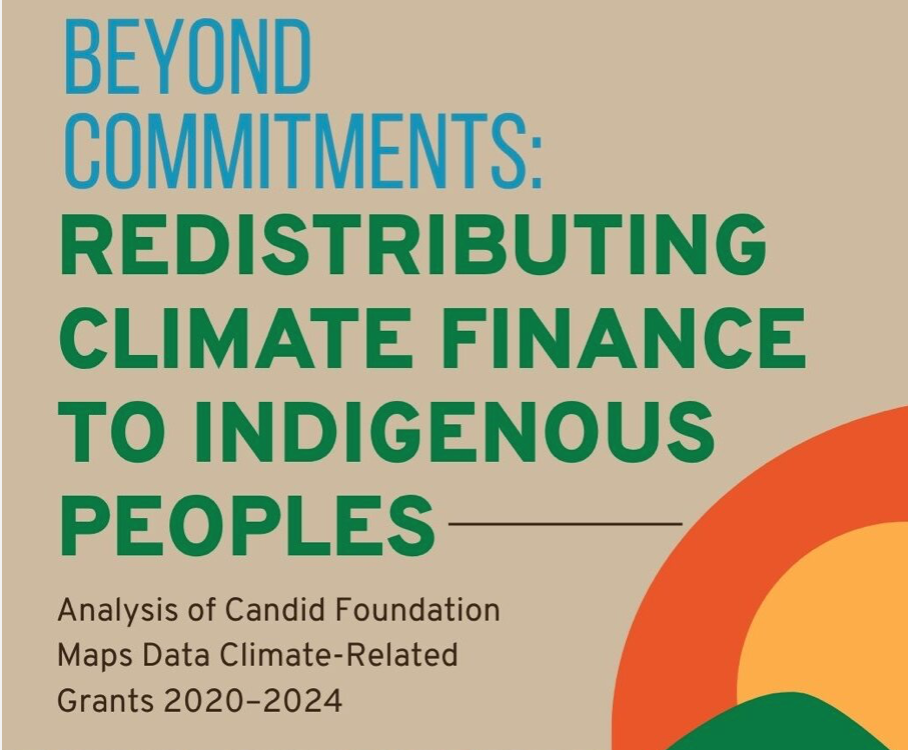
IFIP also released a similar report focused on climate related indigenous funding titled “Beyond Commitments: Redistributing Climate Finance to Indigenous Peoples.” This report examines how much climate finance reaches Indigenous Peoples Organizations (IPOs) directly. It also establishes a distinction between funding benefiting Indigenous Peoples and funding that directly reaches Indigenous-led organizations.
Overall, this report is an update to two previous reports that IFIP has produced in the past that Channel has contributed to “Leaders and Stewards: Global Analysis of Funding to Indigenous Women” and “A Call to Action: Insights Into the Status of Funding for Indigenous Women’s Groups.” This Report in combination with IFIP’s past two reports emphasizes that the indigenous funding movement is an ongoing issue that must continue to be addressed.