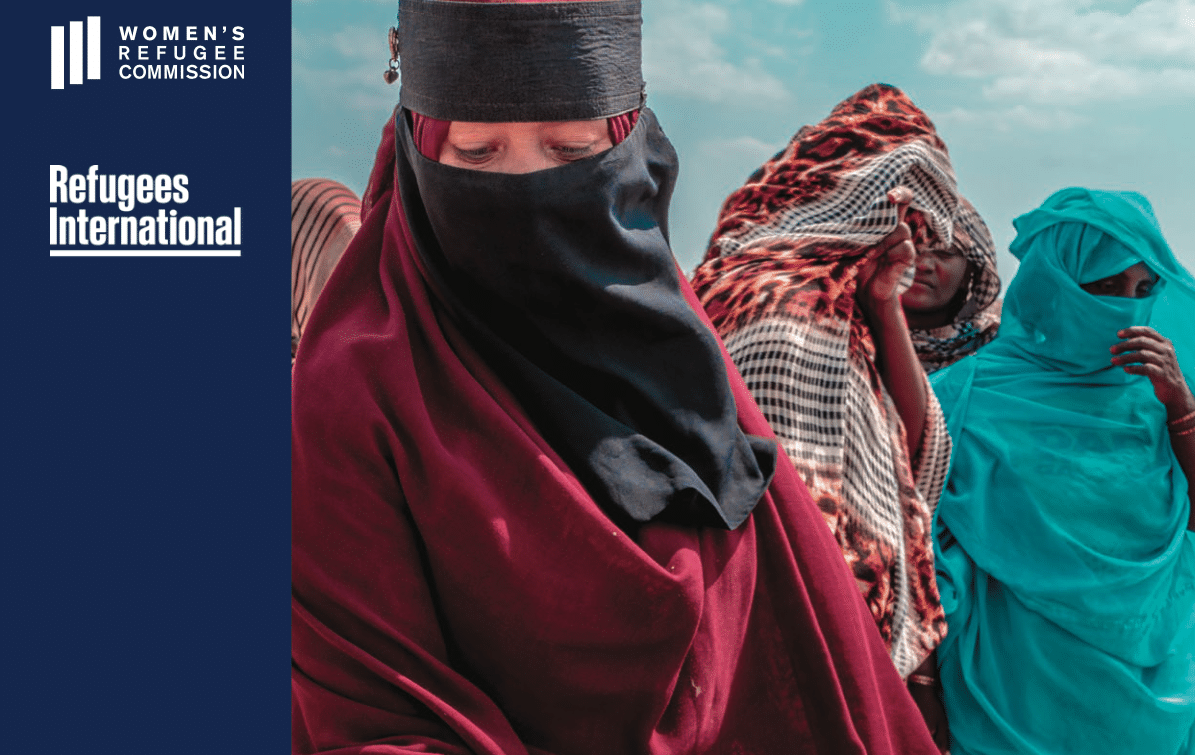
In 2026, Women’s Refugee Commission (WRC) previous grantees of the Channel foundation and Refugees International (RI), released a report, “At What Cost? Women-Led Organizations, Funding Cuts, and the Price of Survival,” examining how recent humanitarian funding cuts are affecting women-led organizations (WLOs) working in crisis settings around the world. The report builds upon another report by WRC “A Year of Harms: The Impact of US Foreign Aid Cuts on Women and Girls in Humanitarian Crises”. The report mainly focuses on how these organizations are responding to dramatic reductions in humanitarian assistance and the consequences these cuts have for women and girls and the broader humanitarian system.
The report comes at a time when humanitarian needs are increasing while international humanitarian funding has reduced significantly. Beginning in late 2024 and intensifying throughout 2025, major donor governments reduced humanitarian assistance, with women-led organizations being disproportionately affected. RI and WRC explain that WLOs play an essential role in reaching women and girls in crisis settings, but many have historically faced barriers to direct funding, decision-making spaces, and long-term institutional support.
The research draws on interviews with representatives from 28 WLOs working in Afghanistan, Bangladesh, Honduras, Lebanon, Sudan, and Ukraine. Interviews were conducted to identify and analyze common themes across different humanitarian contexts.
Across these six contexts, the report identifies three overarching themes of international funding cuts. First, they are exposing longstanding inequalities within the humanitarian system, particularly around who controls funding, who participates in decision-making, and how resources reach local organizations.
Second, WLOs reported being pushed into unsustainable survival strategies, including laying off staff, reducing salaries, relying on volunteers and unpaid labor, narrowing their programs, and seeking alternative sources of income. While these strategies can allow organizations to continue operating now in the short term, they weaken WLOs ability to provide long-term support.
Third, the effects are particularly significant for women and girls. Organizations are cutting all “non urgent” aid efforts which includes, gender based violence prevention and response, mental health and psychosocial support (MHPSS), legal aid, education, livelihoods, and community-based protection. Cuts to these issues disproportionately affect women and can often reverse progress on women’s rights and gender equality.
In Afghanistan, for example, funding cuts have caused the closure of midwife faculties all across the country. Sedigeh(a pseudonym), the executive director of one of these faculties says, “As midwives and healthcare workers, we are one of the very few professional groups of women in Afghanistan who are still permitted to work, but the U..S. funding cut took away that opportunity from many of us as well.”
Another major finding is the gap between commitments to localization and the resources and power given to local organizations. Localization is an effort to give local communities more resources because they understand and know how to combat local issues best. WLO participants described difficulties accessing these funds because of complex eligibility, compliance, reporting, and due diligence requirements which they cannot do because they simply don’t have the resources.
The funding crisis has also changed the competition. As international nongovernmental organizations (INGOs) have experienced funding losses, they are increasingly competing for the smaller grants and funding opportunities that local organizations have traditionally relied upon. Also, as INGOs lose funding, they are less able to provide relief to local organizations that they have typically funded. This has placed WLOs at more of a disadvantage because they have fewer administrative* and fundraising resources.
The report also emphasizes the human cost of relying on local women leaders to absorb funding shortages. WLO staff described burnout, excessive workloads, unpaid labor, loss of technical expertise, and the breakdown of institutional knowledge. The authors argue that the humanitarian system’s emphasis on the “resilience” and “adaptability” of WLOs, but this relates back to encouraging short term solutions for funding shortages that often erode long term function. Asking women to work for free, shrink support staff, and reduce expenditures is not sustainable and will ultimately lead to closure.
WRC recommends that humanitarian actors, donors, and UN agencies to increase direct and dedicated funding to WLOs, prioritize flexible and multi-year grants, simplify funding requirements, expand meaningful WLO participation in humanitarian decision making, and invest in funding models that give WLOs greater autonomy over resources. The report also calls for greater coordination between organizations rather than competition for increasingly limited funding.
Overall, the Report argues that the solution to the current funding crisis cannot simply be asking WLOs to become more resilient or find new ways to survive with fewer resources. The experiences documented across Afghanistan, Bangladesh, Honduras, Lebanon, Sudan, and Ukraine demonstrate the importance of properly supporting WLOs as local organizations that provide essential services that are urgent. Protecting WLOs is necessary for humanitarian responses to be effective, accountable, and sustainable.
The Women’s Refugee Commission and several of Channel’s other grantee partners (including Urgent Action Sister Funds, Alliance for Feminist Movements, Global Resilience Fund and Women’s Learning Partnership) will continue to explore ways to further evolve the field of feminist crisis response to the rapid loss of humanitarian aid.